
Warehouse flooring Solution like polished concrete and Trimix/Kota Stone are reviewed, but Epoxy Coatings are cited as the superior choice due to their exceptional durability against heavy traffic, high chemical resistance, seamless surface for easy cleaning, and customizability with slip-resistant materials. Regardless of the material, which must prioritize longevity, a crucial safety requirement is implementing Line Marking to define safe pathways and designated vehicle areas.
Polished and Sealed Concrete
polished Concrete is cited as a durable and low-maintenance option that can resist most chemicals and stains . Another highly recommended solution is stained and sealed concrete. This approach also helps achieve a dustless environment, as concrete floors can be sealed with products specifically designed for this application to minimize dust from the floor surface itself . polished concrete can be slippery when wet and prone to cracking .
Epoxy and Self-Leveling Epoxy Coatings
Epoxy Coatings are a popular and highly customizable choice for warehouses, offering excellent resistance to chemicals and abrasion and creating a smooth, easy-to-clean surface.
For facilities dealing with forklift traffic, pallet jacks and daily warehouse operations, our warehouse epoxy flooring in Melbourne service is designed around the actual demands of the site.
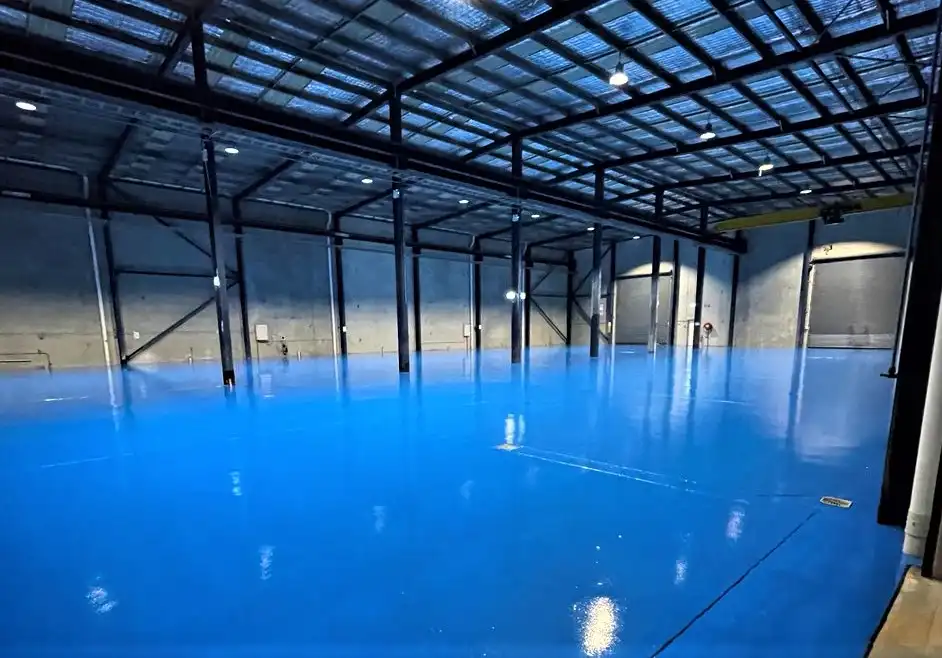
The use of an epoxy sealer is specifically recommended to minimize dust. A specialized variation, Self-leveling epoxy flooring, provides a smooth, even surface that minimizes the risk of tripping hazards, reduces maintenance, and is highly resistant to heavy equipment traffic, spills, and stains in a warehouse setting.
Other Warehouse Flooring Options Compared With Epoxy
There’s more than one way to floor a warehouse. Polished concrete, sealed concrete and resin-based coatings can all work, depending on how the facility is used.
The right choice comes down to factors such as traffic levels, forklifts and other equipment, chemical exposure, cleaning requirements and how much ongoing maintenance the floor is expected to need.
In lower-demand environments, polished or sealed concrete may be enough. Epoxy flooring gives warehouse operators more flexibility, with options for seamless finishes, slip resistance, chemical resistance, safety markings and different system thicknesses.
For busy or high-traffic warehouses, the flooring system should be chosen based on the condition of the existing concrete slab and the day-to-day demands of the facility — not just on appearance.
Warehouse Navigation and Safety Solution
Regardless of the material chosen, an essential operational and safety requirement is:
-
Line Marking: This is necessary for better navigation, safety, and accessibility. Line marking involves painting lines on the floor to define:
- Safe Pathways for employees.
- Designated areas for industrial vehicles (like forklifts) to operate.
Slip-resistant finishes, safety zones and traffic markings can be incorporated into a professionally specified warehouse epoxy flooring system based on how the facility operates.
General Flooring Consideration
A final, overarching consideration regarding material selection is:
-
Durability and Longevity: Commercial flooring (like that used in a warehouse) must be specifically designed to last longer and stand up to heavier use than standard residential flooring.
why Epoxy Flooring is the best solution?
there are many reasons are there one of the major benefit of epoxy flooring is exceptional durability so it can withstand in heavy traffic loads forklifts and the weight of the tor board so ensuring it long lasting performance.
the next one we can say that one high residents to the chemicals oils and spillage that makes it is ideal for the warehouse where hazardous materials or liquids are handled so they protect the underlying concrete very well.
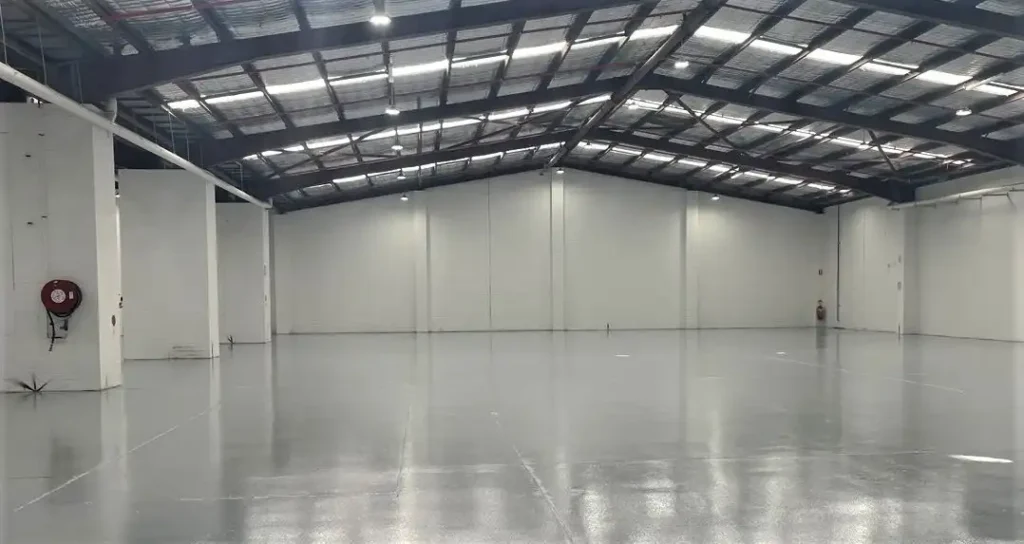
the next one we can say that one the seamless and smooth surface so it will eliminate the cracks and joints and the dirt or dust will accumulate so this is not only enhanced this what we call this cleanliness but also it will easy for the cleaning also then a safety is the top priority of any of the warehouses so in case of these epoxy floor we can customize that one with many type of this clip resistant material so it will give more tractions more tractions for these warehouses.
the next one the glossy finish of this epoxy flooring so that will increase overall brightness of the warehouses so these are the some reason why we are recommending epoxy for warehouse flooring.
Choosing a warehouse floor starts with a few practical questions. What condition is the concrete in? How much traffic will it carry, and what equipment will run over it? What spills is it likely to see, how will it be cleaned and what safety requirements does it need to meet?
If you need a system specified for your facility, visit our Warehouse Epoxy Flooring Melbourne service page. It shows how we assess, prepare and coat warehouse floors across Melbourne.
FAQs
1. What is the single most important factor when choosing warehouse flooring material?
The most important factor is durability and longevity. Commercial flooring must be specifically designed to last longer and stand up to the heavier use, traffic loads, and equipment compared to standard residential flooring.
2. Besides the material, what is a crucial safety and operational requirement for all warehouse floors?
Line Marking is a crucial safety requirement.
3. What is Self-leveling epoxy flooring?
Self-leveling epoxy is a specialized variation that provides a smooth, even surface. This minimizes the risk of tripping hazards, reduces maintenance, and is highly resistant to heavy equipment traffic, spills, and stains.
4. Can epoxy help with the dust issue on concrete floors?
Yes, the use of an epoxy sealer or coating is specifically recommended to minimize dust by sealing the concrete surface.
5. What are the main advantages of Polished and Sealed Concrete?
Polished concrete is a durable and low-maintenance option that can resist most chemicals and stains. Sealing the concrete also helps to achieve a dustless environment by minimizing dust from the floor surface itself.