
If you’re considering a flooring upgrade for your Melbourne home or business, epoxy flooring is a standout choice that combines functionality and style in a unique way. Known for its robustness and sleek finish, epoxy flooring has become a popular choice across various industries and residential areas. This extensive guide delves deep into the many facets of epoxy flooring, helping you understand everything from its basic definition to detailed installation processes, maintenance tips, and cost considerations in the context of Melbourne, Australia.
1. What is Epoxy Flooring?
Epoxy flooring is more than just a protective surface; it’s a resilient and versatile flooring system that consists of two main components: resins and hardeners. one of the best methods of flooring for industrial, commercial, pharmaceuticals. Epoxy is a very safe coating for your hard floors and it is slip resistant. Compared to other types of flooring، epoxy floors are highly durable. Also, it has no joints so it is easy to clean.
What is the composition of epoxy flooring?
epoxy flooring made of two part:
Epoxy Resin (Part A): The primary polymer component.
Hardener or Curing Agent (Part B): The component that is mixed with the resin to initiate the chemical reaction (curing) and create the hard floor coating.
Epoxy flooring is a durable, protective coating applied over concrete surfaces, primarily composed of two main parts: an epoxide resin (Part A) and a hardener or curing agent (Part B). These two parts mix together in a chemical reaction to form a rigid, plastic material with high strength, excellent adhesion, and chemical as well as heat resistance.
2. What is Epoxy Flooring Used For?
Epoxy flooring is used as a desirable home improvement project for a space (implied to be a garage) that requires a significant clean-out and preparation effort before the coating can be applied. The difficulty of clearing the space is the main thing holding people back from installing it.
As a coating, epoxy flooring is widely used in residential garages, commercial kitchens, hospitals, and industrial warehouses for a seamless, protective, and hygienic surface, though attempting to install it often runs into one major hurdle: the necessary, time-consuming effort of thoroughly cleaning and prepping the area before the two-part system can be successfully applied.
2.1 Commercial and Industrial Spaces
Epoxy flooring is common in warehouses, factories, and other commercial buildings since it’s not easily damaged and can resist heavy foot and vehicle traffic, among other elements such as chemicals and spills.
It provides a seamless and easy-to-clean surface that makes it suitable for environments where cleanliness and hygiene are important.
2.2 Retail Stores and Showrooms
Most of the retail shops and showrooms around Melbourne prefer epoxy flooring due to its classy and modern look, which will add extra beauty to the place. It is also highly customizable, with businesses able to include logos, patterns, or specific colors into the flooring.
2.3 Garages and Automotive Workshops
The majority of property owners in Melbourne install epoxy coating in their garage floors due to its toughness and attractive appearance, which supports the weight of vehicles, resists stain from oil and grease, and is highly washable.
2.4 Healthcare Facilities
Epoxy flooring is used in hospitals, clinics, and other healthcare facilities in Melbourne in operating theaters, laboratories, and patient rooms, thanks to its hygienic qualities of preventing the growth of bacteria and germs.
2.5 Food and Beverage Industry
Epoxy flooring has a wide use in restaurants, cafes, commercial kitchens, and food processing plants because of the meeting of strict health and safety standards, resistance to stains and spills, and withstanding frequent cleaning using harsh chemicals.
2.6 Residential Applications
Epoxy floorings are applied in residential settings, especially in basements, kitchens, bathrooms, and living areas, providing a durable, waterproof surface that is easy to maintain and aesthetically customized to the owner’s liking.
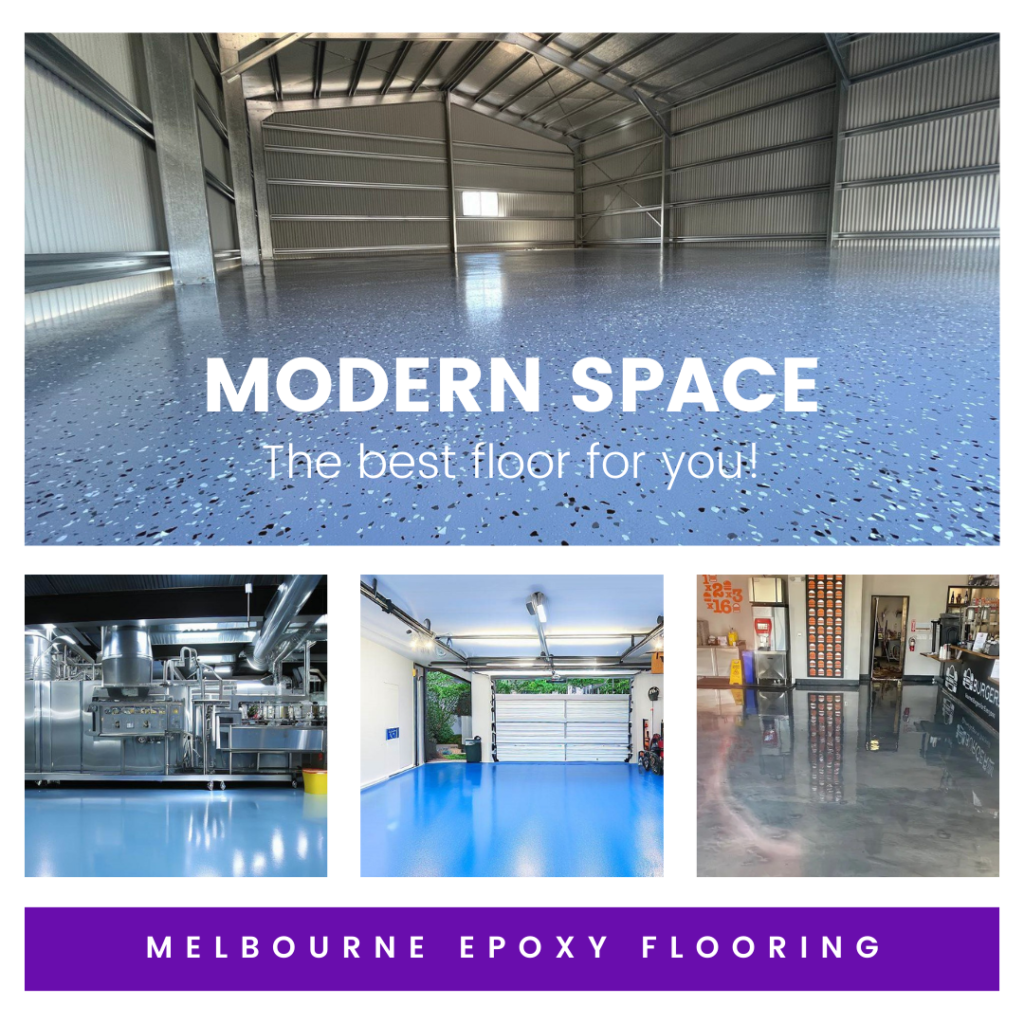
3. Process of Installing Epoxy Flooring
Installation of the epoxy floor is a very precise process, and to have a successful application, one must perform several steps:
3.1 Initial Floor Preparation
Preparation of the substrate covers thorough surface cleaning and filling any cracks, holes, or irregularities. Preparation may also require grinding, shot-blasting, or scarifying of the concrete to achieve an appropriate profile for the adhesion of epoxy.
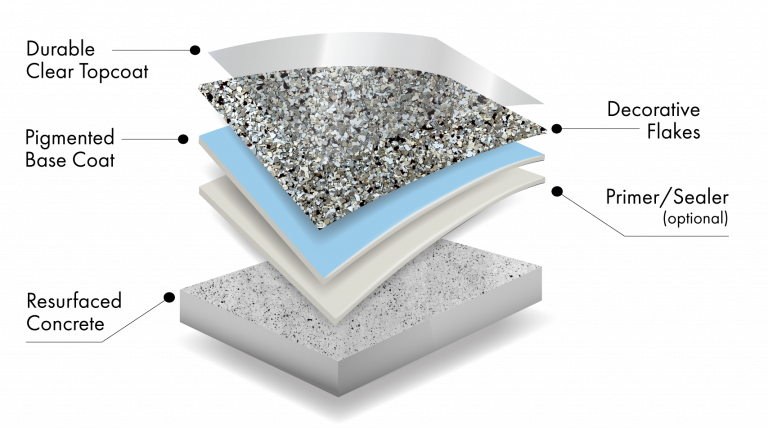
3.2 Application of Primer and Base Coat
Next, a primer is put down, which further improves the adherence of the concrete and the epoxy. After that, an epoxy base coat is applied. This coat is critical because it serves as the foundation for the rest of the flooring system.
3.3 Application of Epoxy
Above the base coat, additional layers of epoxy or decorative elements are applied. Specific applications can vary and may involve troweling, rolling, or squeegeeing, depending on the type of epoxy being used and the desired finish.
3.4 Curing and Sealing
The last step of the installation process is the curing, which takes a few days. Following the curing process, a sealant can be applied in order to protect the floor and give it an aesthetic finish.
4. Types of Epoxy Flooring Available
Depending on your specific needs, there are several types of epoxy flooring systems available:
4.1 Self-Leveling Epoxy Floors
It is ideal for uneven surface correction, providing a smooth finish. It’s particularly suitable for commercial and industrial buildings where floors must support heavy traffic or large equipment.
4.2 Epoxy Mortar Floors
Composed of 100% solid epoxies combined with graded sand or quartz sand, epoxy mortar floors are about as durable as they come. They are often used in heavy-duty industrial applications and can be used to repair cracks before a floor is finished.
4.3 Decorative Epoxy Floors
These floors combine colored chips or metallic powders for a decorative look, yet with no loss in the intrinsic value of the epoxy. Decorative epoxy is ideal for showrooms and retail stores, or even residential areas, and can be custom-colored to fit any interior style.
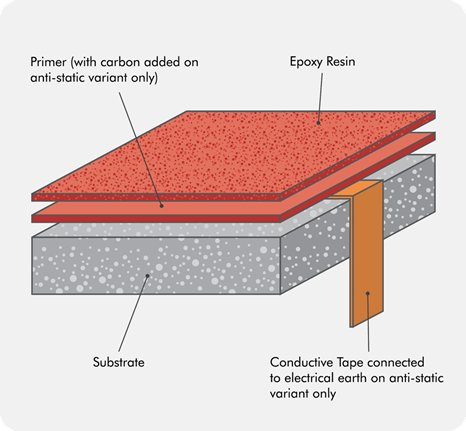
4.4 Anti-Static Epoxy Floors (ESD Resistant Floors)
Anti-static epoxy floors may be a critical feature in environments that will be prone to static electricity, such as electronic manufacturing or laboratories. These minimize static hazards, thus protecting sensitive equipment and enhancing workplace safety.
4.5 Quartz-Filled Epoxy Floors
Combining the durability of epoxy with the aesthetic appeal of colored quartz, quartz-filled epoxy floors offer a visually striking and functional flooring solution that is perfect for public spaces, schools, and healthcare facilities.
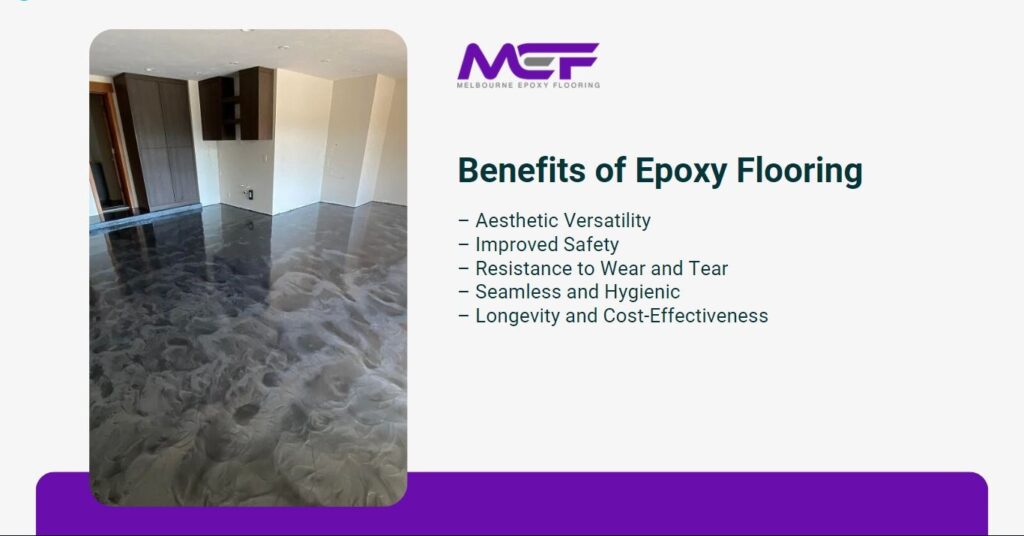
5. Benefits of Epoxy Flooring in Melbourne
The flooring should be visually appealing and highly durable in Melbourne’s dynamic climate and bustling urban environment. Epoxy flooring meets such demands and offers several compelling advantages. See below top epoxy flooring benefits for properties in Melbourne:
5.1 Aesthetic Versatility
Epoxy comes in a range of finishes-from high-gloss to subtle matte-allowing it to easily emulate the look of much more expensive flooring options, such as terrazzo or marble.
5.2 Improved Safety
With the addition of non-slip additives, epoxy flooring can be made safe for areas that are prone to wet conditions or heavy foot traffic, ideal for public venues, commercial kitchens, and hospitals.
5.3 Resistance to Wear and Tear
Epoxy flooring is tough and resilient against impacts, stains, and chemical spills, making it suitable for industrial settings or places with heavy machinery.
5.4 Seamless and Hygienic
Because the joints and seams are nonexistent in continuous surface epoxy floors, dirt and bacteria have no places to hide, and cleaning is hence easier.
5.5 Longevity and Economy
Because of its tough nature, very few repairs or replacements are needed, making epoxy flooring a long-term investment that provides lower lifecycle costs compared to other options.
6. Disadvantages of Epoxy Flooring and Strategies for Mitigation
Epoxy flooring, known for its durability and design versatility, comes with certain drawbacks that can be addressed to enhance its overall appeal. Below are the key disadvantages associated with epoxy flooring along with strategies to convert them into advantages:
6.1 Slipperiness When Wet
– Epoxy floors tend to become slippery when wet, posing a safety risk.
– Solution: Incorporate anti-slip additives during installation to improve traction. ( read more about Australian slip resistance standards )
6.2 Complex Installation Process
– Professional expertise is essential for proper epoxy floor installation to prevent issues like bubbling or peeling.
– Opportunity: Offer professional installation services to ensure a flawless finish and customer satisfaction.
6.3 Temperature and Humidity Sensitivity
– Temperature and humidity fluctuations during installation can impact the final outcome.
– Approach: Control the environment during installation or target regions with stable climates for optimal results.
6.4 Extended Curing Time
– Epoxy floors require a prolonged curing period post-installation.
– Strategy: Inform customers upfront about curing time and schedule installations during non-operational hours to minimize disruptions.
6.5 Hardness Leading to Discomfort
– The hardness of epoxy flooring may cause discomfort in areas where individuals stand for extended periods.
– Resolution: Use anti-fatigue mats in standing areas to enhance comfort levels.
6.6 Challenges in Repairing Damages
– Repairing small cracks or chips in epoxy flooring can be arduous without replacing the entire floor.
– Approach: Provide a comprehensive warranty or repair service as a unique selling point.
7. Maintenance Tips for Epoxy Flooring
To maximize the lifespan and appearance of your epoxy flooring, regular maintenance is essential. Here are some practical tips:
7.1 Routine Cleaning
Regular sweeping and occasional mopping with mild cleaners are sufficient to keep the floor looking new. Avoid abrasive tools and harsh chemicals.
7.2 Dealing with Spills
Immediate action on spills will prevent potential staining and slipping hazards.
7.3 Periodic Checks
Regularly check for any signs of wear or damage, such as scratches or lifting, and address these issues promptly to maintain the integrity of the flooring.
8. Cost Considerations for Epoxy Flooring in Melbourne
The cost of epoxy flooring in Melbourne varies based on several factors, including the type of epoxy, the condition of the existing floor, the total area to be covered, and the complexity of the design chosen. Basic epoxy flooring installations can start from around $30 to $35 per square meter, while more elaborate designs and high-performance coatings may cost $80 per square meter or more.
9. Conclusion: Enhance Your Space with Epoxy Flooring
Choosing epoxy flooring is an excellent way to enhance the functionality and aesthetic appeal of your space. Whether you are updating a commercial property or revamping your home, epoxy offers a durable, attractive, and cost-effective solution. With its wide range of finishes and styles, easy maintenance, and strong performance under tough conditions, epoxy flooring is an investment that will transform and enrich any Melbourne property.
By understanding the unique properties, types, and benefits of epoxy flooring, you can make an informed decision that aligns with your needs and expectations. Embrace the change that epoxy flooring can bring to your space and enjoy its lasting beauty and resilience.